
What Does Derivatives Activity Reveal About Market Sentiment?
The derivatives market plays an important role in understanding the investor’s behaviour and market expectations. In India, derivatives such as futures and options (F&O) have been in use for hedging, profiting, and arbitrage. By analysing derivatives data, market participants can get valuable insights into the broader market sentiments. In this blog, we will discuss what derivative activity reveals about market sentiment.
Understanding the derivatives market
Derivatives are financial contracts whose value is derived from an underlying asset such as stocks, indices, or commodities. In India, the derivatives segment is dominated primarily by index options, followed by stock futures and stock options that are traded on exchanges like the National Stock Exchange of India and the Bombay Stock Exchange. There are two main purposes that investors use derivatives for:
- Hedging: Protecting portfolios against market volatility.
- Profit: Taking on leveraged positions to profit from price movements.
Because of the leverage involved and forward-looking expectations, their activity often reflects how traders expect the market to move in the near future.
Key indicators that reflect market sentiment
Some key derivatives indicators that reflect the market sentiment have been mentioned below:
Open Interest (OI)
Open interest represents the total number of outstanding derivative contracts in the market. Rising open interest alongside rising prices indicates strong bullish sentiment, as new positions are being opened to support the trend.
On the other hand, increasing open interest with falling prices signals a bearish sentiment, indicating that traders are betting on further downside.
Put-Call Ratio (PCR)
The Put-Call Ratio is a measurement that is used to compare the number of put options traded to call options. Many traders regularly track PCR data to gauge market mood as:
- High PCR: Indicates that there are more put options outstanding than call options. This often suggests a bearish sentiment, as more participants are betting on or protecting against a price fall. However, a high PCR can sometimes act as a contrarian indicator, signalling that the market is due for a rebound.
- Low PCR: Indicates that there are significantly more call options outstanding. This indicates bullish sentiment, with market participants expecting prices to rise. A low PCR, conversely, signals a potential for a market correction.
Futures Premium or Discount
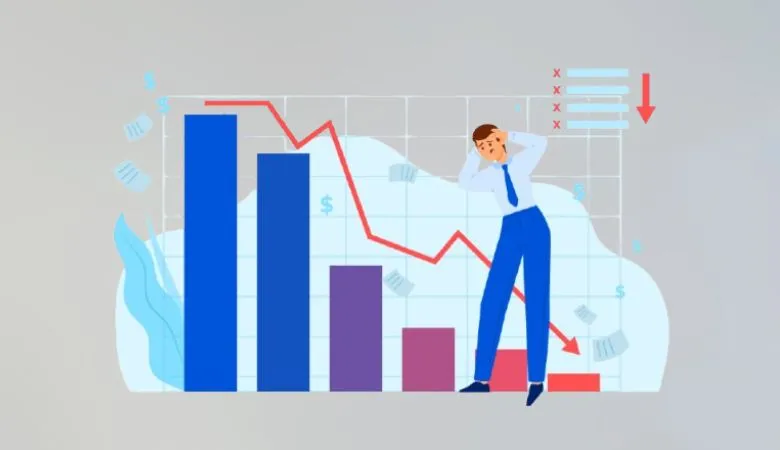
Futures often trade at a premium due to cost-of-carry factors, though large premiums can reflect bullish market conditions. However, if futures start trading at a discount to the spot market, it may indicate bearish sentiment or reduced demand for leveraged positions.
Volatility Index (VIX)
The India VIX, often referred to as the fear index, is a measure of the market’s expectation of volatility over the next 30 days. It is calculated based on the prices of Nifty 50 index options.
- Rising VIX: Indicates increasing market uncertainty and fear among investors, often preceding or accompanying significant market downturns.
- Falling VIX: Indicates increasing confidence and decreasing uncertainty, usually observed during bullish market phases or periods of stability.
F&O ban list
The other important indicator that traders watch out for is the F&O ban list. A stock comes under the F&O ban list when its derivative contracts exceed 95% of the market-wide position limit (MWPL) set by the exchange. During this period, the traders are not allowed to open new positions; they can reduce existing positions.
The ban is imposed with the intention of preventing over-speculation and stabilising the market. For traders, the presence of a stock in the ban list often indicates that there is extremely high derivative activity, which signals strong speculative interest or high volatility expectations.
How derivatives activity influences the overall market
India’s derivatives market has grown manifold in the last few years, and today it is one of the largest in the world in terms of trading volume. Derivative markets do not trade in isolation.
They often influence price movements in the cash market. Heavy options activity around index levels can create support and resistance zones. Similarly, high futures positions by institutional investors can help drive short-term momentum in underlying stocks.
Changes in derivative participation can also affect liquidity and volatility in the cash market, as some shares trade in both segments. For example, the Bajaj Finance share price is actively traded in both the cash and derivatives segments.
Conclusion
Derivatives activity provides a powerful lens for understanding market sentiment. Indicators such as open interest trends, the Put-Call Ratio, futures pricing, Volatility Index (VIX), and the F&O ban list help market participants identify where traders are placing their bets.
By combining derivatives data with fundamental analysis, market participants can better interpret market signals and make more informed decisions.
Also Read: What is Electronic Invoicing?